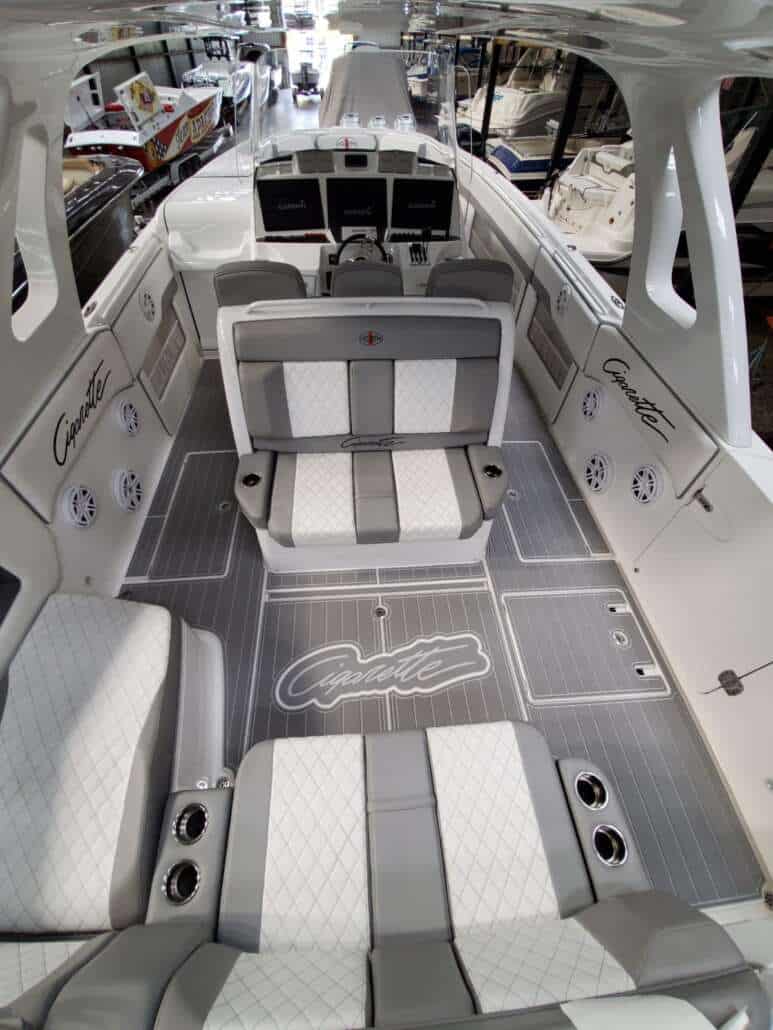
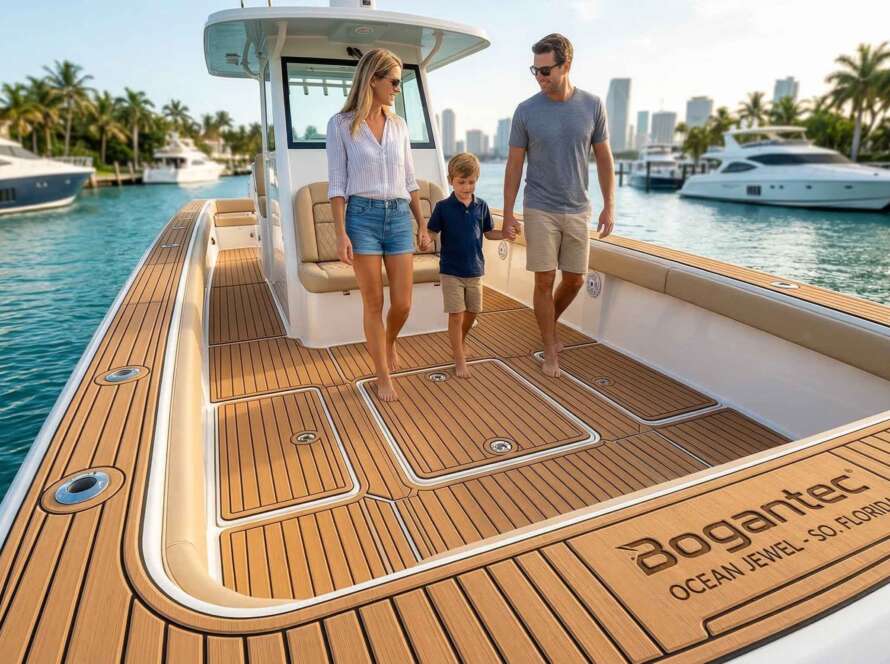
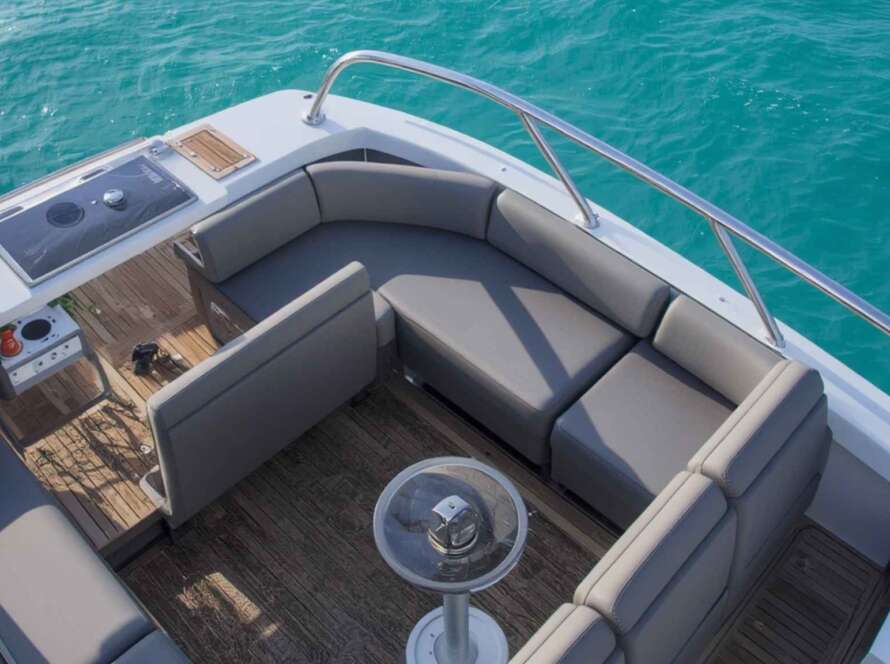
Your boat deck takes a daily beating. The Florida sun bakes it. Saltwater attacks it. Fish blood stains it. Finding the right marine flooring means the difference between a pristine, comfortable deck and a crumbling, slippery liability.
We know the frustration of peeling foam and cracked fiberglass. You need a boat flooring upgrade that actually survives Biscayne Bay and the Intracoastal. This guide breaks down the exact material science behind modern boat decking. We skip the generic marketing fluff. Instead, we analyze thermal resistance, structural durability, and traction metrics so you can make a permanent fix.
The Real Enemies of Your Boat Deck: Why Standard Surfaces Fail
South Florida operates as an active testing ground for material failure. High humidity and relentless UV rays destroy weak adhesives.
Severe UV degradation and the sticky deck syndrome
Ultraviolet radiation breaks down chemical bonds. Standard marine foam flooring eventually turns into a sticky, degrading mess. You step on it. It transfers to your shoes. You track it everywhere. This happens because cheap polymers cannot withstand constant 90-degree exposure.
Thermal retention: Why some materials burn your feet in July
Dark fiberglass and dense rubber composites absorb heat aggressively. Walk barefoot across an exposed deck in Miami during July. You will feel it instantly. A quality deck must actively resist heat transfer, keeping the surface temperature manageable even at high noon.
Raw Material Breakdown: Evaluating the Core Options
You have three main categories to consider. Let us look at the actual chemistry.
PE Foam Flooring vs. EVA Foam Flooring: The microscopic difference in cell structure
Most competitors sell EVA (ethyl-vinyl-acetate) foam. It feels soft initially. It also degrades fast. At Bogantec, our LightDek product uses pure polyethylene (PE). This distinction matters immensely. PE features a significantly finer cell structure than EVA. Tighter cells mean superior insulation and zero water absorption. PE resists heat transfer better, meaning your deck stays noticeably cooler in extreme heat. It boasts higher tear strength. EVA tears when you drop a heavy cooler on it. PE absorbs the impact and recovers.
Marine Vinyl: Durability metrics and maintenance realities for high-traffic decks
Marine vinyl offers a rugged, woven alternative. It resists tearing and handles heavy foot traffic well. However, marine vinyl gets extremely hot. It also requires specific cleaning chemicals to prevent mold buildup deep within the woven texture.
Traditional Teak vs. Modern Wood-Free Synthetic Teak
Real wood looks incredible. It also demands constant sanding, oiling, and sealing. Our Natural Teak decking provides the luxury aesthetic without the rot. We computer-design every piece using a patented construction system. It remains 100% wood-free. No splinters. No swelling. No cracking.
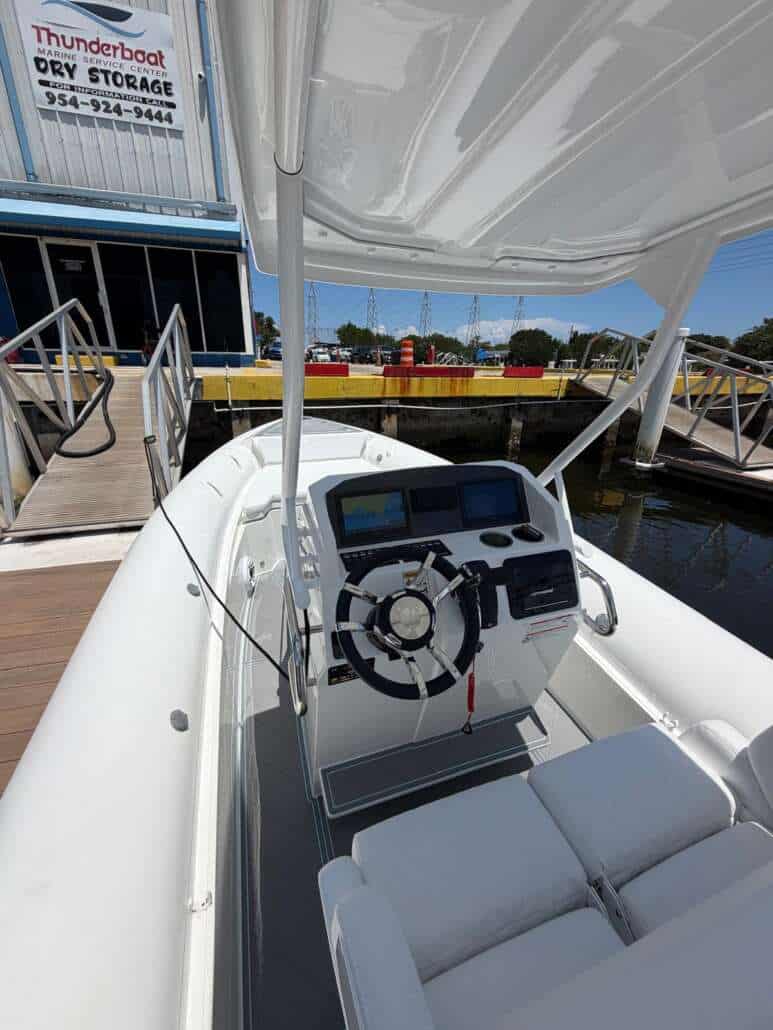
Performance Matrix: Durability, Maintenance, and Slip-Resistance
How do these materials actually perform under operational stress?
Anti-slip deck execution: Traction ratings under wet, high-speed conditions
An anti-slip deck prevents offshore injuries. When you hit a wave off the Florida Keys, you need absolute grip. PE foam provides aggressive, multi-directional traction whether it is bone dry or completely soaked in seawater.
Blood, fuel, and saltwater: Real-world stain resistance and cleaning protocols
You will spill things. Mahi blood, diesel fuel, and red wine ruin porous surfaces. Because PE foam features a closed-cell structure, liquids sit on top. They do not soak in. You spray it down. You wipe it off. Maintenance takes five minutes instead of an hour of heavy scrubbing.
Lifespan projections: What actually lasts past season three?
Cheap EVA peels within 18 months. Wood requires annual maintenance. A properly installed PE foam deck easily lasts 5 to 7 years under heavy use.
Information Gain: The Hidden Costs of Poor Installation & Material Selection
Avoid the expensive mistakes most first-time buyers make.
The EVA adhesive failure: Why cheap boat decking peels at the edges
Adhesive fails when the foam above it expands and contracts wildly in the sun. EVA shrinks. When it shrinks, it pulls away from the fiberglass. The edges lift. Water gets underneath. The entire panel detaches. PE foam remains dimensionally stable. It stays put.
Chemical breakdown: How sunscreen and fuel dissolve inferior foam formulations
Aerosol sunscreens contain chemicals that melt cheap plastics. Spray it on your legs over an EVA deck, and you will find permanent spots the next day. High-grade PE resists these common chemical attacks.
Regulatory compliance: When do you need USCG Approved or IMO certified materials?
Commercial vessels and luxury yachts face strict fire safety regulations. Standard foam flooring fails these tests. Bogantec’s LightDek is IMO (International Maritime Organization) fire rating certified. It carries US Coast Guard approval number 164.112. If you specify materials for high-end builds, you need this specific documentation.
The Final Verdict: Selecting Your Next Boat Flooring Upgrade
Match the material directly to your specific mission.
The best choice for sport fishing and center consoles
LightDek PE foam wins here. It absorbs shock, saving your knees during long offshore runs. It cleans up instantly after a chaotic bite.
The best choice for luxury yachts and high-end cruisers
Natural Teak delivers the classic aesthetic. It gives you the high-dollar look without the heavy maintenance schedule.
Next operational steps: Getting precise deck measurements
A custom boat deck requires exact templating. We handle the digital measurement process to ensure a perfect fit around every hatch and center console.
Frequently Asked Questions
Q: Does marine foam flooring absorb fish blood or fuel? A: Cheap, open-cell foams will stain permanently. High-quality PE foam features a fine cell structure that completely blocks liquid absorption. You can simply wash away blood and fuel.
Q: How do PE and EVA foam options compare in direct sunlight? A: PE foam maintains a finer cell structure, which insulates better and resists heat transfer. EVA foam gets much hotter in direct Florida sunlight and is prone to shrinking and peeling.
Q: What is the average lifespan of a synthetic boat decking upgrade?
A: A professionally installed PE foam deck will last 5 to 7 years in harsh marine environments. Proper cleaning and covering the boat when not in use can extend this lifespan even further.
Ready to fix your deck permanently? Request a free estimate for your custom boat deck through our Contact page today.